
The Role of Gemstone Provenance in Collecting: What Documentation Actually Proves

A serious gemstone rarely arrives alone. It comes with a small archive — a lab report, perhaps an older one beneath it, an invoice, sometimes a letter, occasionally nothing more than a family's certainty about where it came from. Collectors learn quickly that this archive matters, and that the word for it is provenance. What they learn more slowly is that provenance is not a single thing, that different documents prove very different things, and that the most important judgments about a stone often sit in the space the paperwork leaves open.
In One Minute Provenance is the documented trail behind a gemstone — what it is, how it was treated, where it was found, and whose hands it has passed through. Good documentation does real work: it confirms identity, discloses treatment, and supports a confident valuation. But provenance has limits that every collector should understand. A lab report is an expert opinion at a moment in time, not a guarantee. Origin can be stated with varying confidence depending on the stone. Ownership history is often partial. The goal of reading provenance well is not to find a perfect paper trail, which rarely exists, but to understand what each document genuinely establishes and where informed judgment still has to carry the weight. If you would like to discuss the documentation behind a specific stone, a private consultation with Caram is unhurried and discreet.
What Provenance Means in Fine Gemstones
Provenance, in the world of colored gemstones, is the body of evidence that establishes a stone's identity, its treatment status, its geographic origin where determinable, and its chain of ownership. It is assembled from laboratory reports, invoices, prior valuations, insurance schedules, correspondence, and the recollections of the people who have owned the piece. No single document is provenance on its own; provenance is the picture they form together.
It helps to separate the word from its more romantic cousin. In the art world, provenance often means the named lineage of owners — a painting that hung in a particular collection, sold at a particular auction. In gemstones, ownership history is part of provenance but rarely the most decisive part. A ruby does not become more valuable because a duchess once wore it, unless that fact can be proven and the market happens to care. What moves value in a colored stone is, first, what the stone actually is, and second, what an independent laboratory is willing to say about it. Ownership is the layer that adds story and, occasionally, premium. Identity and treatment are the layers that establish worth.
The Four Things Documentation Can Prove
Most of the paperwork behind a fine gemstone is working to establish one of four things. Reading provenance well begins with knowing which document speaks to which question.
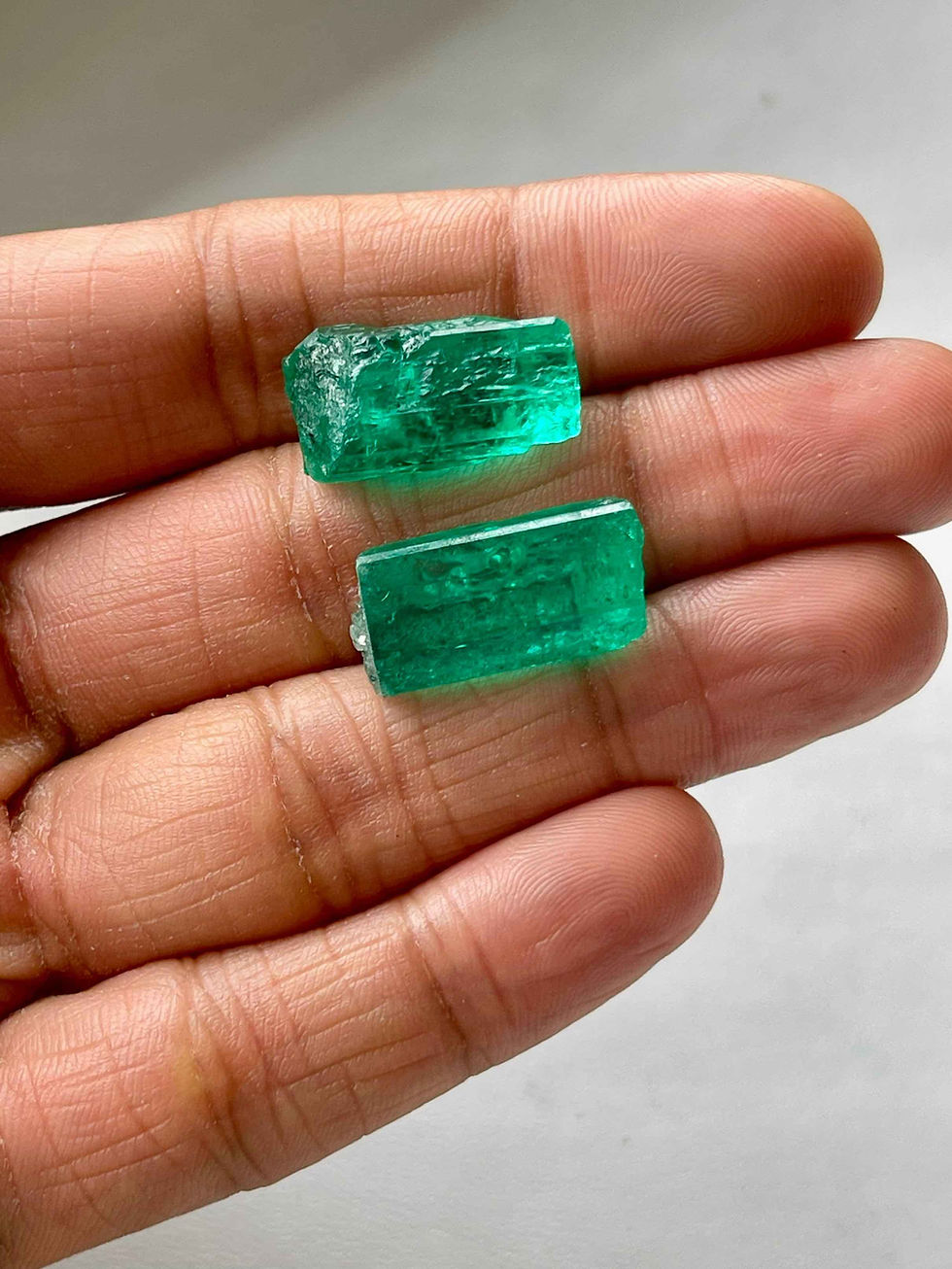
Identity — what the stone is. A reputable laboratory report confirms the species and variety: that a green stone is an emerald rather than a green tourmaline or a doublet, that a red stone is a natural ruby rather than a synthetic or a glass-filled composite. This is the foundation. Everything else assumes it.
Treatment — what has been done to the stone. Almost all colored gemstones are evaluated for enhancement, and disclosure of treatment is one of the most consequential things a report provides. Whether a sapphire is unheated or heated, whether an emerald shows minor or significant clarity enhancement, whether a ruby has been treated by methods the market views with caution — these distinctions can change value by multiples. A report that discloses treatment honestly is doing more for a collector than one that simply flatters the stone.
Origin — where the stone was found. For certain gemstones, geographic origin carries real weight: Kashmir for sapphire, Burma for ruby, Colombia for emerald. Origin determination is a specialized opinion, offered with varying confidence by the laboratories equipped to give it. It is worth understanding that origin is an inference drawn from a stone's internal characteristics, not a fact stamped onto it at the mine.
Ownership — whose hands it has passed through. Invoices, prior appraisals, insurance records, and correspondence build the chain of custody. This layer rarely sets the floor on value, but it adds confidence, context, and sometimes the kind of story that makes a piece meaningful beyond its gemological merits.
What Documentation Cannot Prove
Here is where many collectors are quietly misled — not by dishonest sellers, but by an understandable wish for paperwork to be more conclusive than it is.
A laboratory report is an expert opinion, formed at a particular moment, using the standards and instruments of that moment. It is among the most reliable opinions available, and a report from a respected laboratory should be taken seriously. But it is not a permanent guarantee, and it does not foreclose the possibility that another laboratory, or the same one years later with better instruments, might phrase things differently. This is most visible with origin, where two excellent laboratories can occasionally reach different conclusions on a difficult stone. It is not a sign that one of them is wrong; it is a sign that origin determination is interpretive at the edges.
Documentation also cannot prove that a stone is a good buy. A report confirms what a stone is; it says nothing about whether the price is fair, whether the cut flatters or wastes the material, or whether the color is the kind that holds its appeal across markets and decades. A flawless paper trail can accompany a mediocre stone bought badly. The trail tells you the stone is real. It does not tell you the stone is right.
And provenance cannot reconstruct what was never recorded. A great many fine stones, particularly those that have passed through families or older trade channels, simply have no complete history. The absence of a full paper trail is common and is not, by itself, a warning sign. It changes how a stone is assessed; it does not condemn it.
How to Read the Trail Behind a Stone
When a documented stone comes into your consideration, a small amount of structured reading separates confidence from assumption.
Start with the laboratory, not the conclusion. A report's authority depends on who issued it. Reports from internationally respected laboratories carry more weight, particularly on the difficult questions of origin and treatment. The name on the report matters as much as the words inside it.
Read the treatment language closely. This is where value most often lives or evaporates. Understand exactly what the report discloses, and where a term is unfamiliar, ask. Vagueness in treatment language is the thing to slow down for.
Treat origin as an opinion with a confidence level. For some stones, origin is stated firmly; for others, more cautiously, or not at all. A cautious origin statement is not a defect in the stone — it is honesty about the limits of determination.
Check the date. A report is a snapshot. An older report may predate current treatment terminology or reflect standards since refined. It remains useful as a starting point, but its age is part of how you weigh it.
Let the documents corroborate each other. A single document is a claim. Several documents that agree — a report, an invoice, an insurance schedule, a photograph — are a trail. Provenance gains its strength from corroboration, not from any one piece of paper.
For the practical mechanics of reading a single report, our guide on how to read a gemstone report walks through the fields in plain language.
Provenance and Value: The Honest Relationship
It is fair to ask how much provenance is worth. The honest answer is that it sets the conditions for value rather than dictating it.
Strong documentation does not add a fixed percentage to a stone. What it does is reduce uncertainty — and uncertainty is expensive. A buyer who must wonder whether a sapphire is truly unheated, or whether an emerald's origin is as claimed, will discount for that doubt or walk away. Documentation that resolves those questions allows the stone to be valued for what it is, confidently, by both buyer and seller. In that sense provenance does not inflate value so much as unlock it.
The exception is the stone whose ownership history is itself remarkable and provable. There, provenance can command a genuine premium. But these are rare, and the premium attaches to the proof, not to the story alone. For most fine stones, the working truth is simpler: good provenance is what lets a good stone be recognized as one.
This is also why the same stone can be valued differently for different purposes — a point that matters as much as the paperwork itself. Our guide on the difference between valuation and appraisal explains why the number depends on the question being asked.
When Provenance Is Incomplete
Most collectors will, at some point, fall in love with a stone whose history is partial. An inherited ruby with no report. An older emerald with an invoice but no lab document. A sapphire bought decades ago, before origin determination was routine.
Incomplete provenance is not a reason to walk away; it is a reason to understand what can still be established. A stone can be examined and, where it matters, sent to a respected laboratory for a current report — which is often the single most valuable step a collector can take with an undocumented but significant piece. Family memory, old photographs, and correspondence cannot substitute for a lab report, but they add context that a report alone never carries. The question is never simply "is there paperwork," but "what would it take to know what I need to know about this particular stone, for what I intend to do with it." For inherited pieces specifically, our guide on what to do first with inherited jewelry sets out a calm sequence.
FAQs
What does provenance mean for a gemstone? Provenance is the documented trail behind a stone — the evidence that establishes what it is, how it has been treated, where it was found where that can be determined, and who has owned it. It is built from laboratory reports, invoices, prior valuations, and family history, and no single document constitutes provenance on its own.
Does a gemstone need provenance to be valuable? A stone's core value rests on what it actually is — its species, quality, treatment status, and where relevant its origin. Documentation does not create that value, but it allows the value to be recognized confidently. Many fine stones have incomplete histories and remain valuable; the documentation reduces uncertainty rather than manufacturing worth.
Can a lab report be wrong? A report from a respected laboratory is a reliable expert opinion, but it is an opinion formed at a moment in time, not a permanent guarantee. This is most visible with origin, where two excellent laboratories can occasionally reach different conclusions on a difficult stone. That reflects the interpretive nature of origin determination, not a failure of the report.
What is the difference between origin and provenance? Origin is where a stone was geologically formed — a single attribute, determined by a laboratory from the stone's internal characteristics. Provenance is the broader trail of evidence about the stone, of which origin is one part alongside identity, treatment, and ownership history.
Is a stone without documentation a bad buy? Not necessarily. The absence of a complete paper trail is common, particularly with inherited or older stones, and does not by itself indicate a problem. It changes how the stone should be assessed — often by obtaining a current laboratory report — rather than ruling it out.
How much does provenance add to a gemstone's value? There is no fixed percentage. Strong documentation works by removing the doubt that would otherwise cause a buyer to discount or hesitate, which allows a good stone to be valued for what it is. A genuinely remarkable and provable ownership history can command a premium, but that is the exception rather than the rule.
Key Takeaways
Provenance is a trail of evidence, not a single document — it works through corroboration across reports, invoices, and history.
Documentation can prove identity, treatment, origin, and ownership, but it cannot prove that a stone is a good buy, nor can it guarantee an opinion will never be revised.
Good provenance unlocks value by reducing uncertainty rather than inflating it.
Incomplete history is common and not disqualifying; the right question is what it would take to know what you need to know about a particular stone.
Provenance, read well, is less a search for a perfect paper trail than a way of seeing a stone clearly — knowing what each document genuinely establishes, and respecting the judgment that still has to carry the rest. It is the discipline that turns a beautiful object into a considered acquisition.
If you are weighing a stone and would like to understand what its documentation does and does not establish, Caram offers private, unhurried consultations on colored gemstones and the provenance behind them. Begin with a consultation · Learn more about Caram valuations
About The Author
Rahul Jain is part of Caram's seven-generation gemstone legacy and leads Caram's work with collectors, families, and private clients across fine emeralds, sapphires, and rubies, including the provenance and valuation of significant colored gemstones.
Rahul writes a quarterly letter for collectors and connoisseurs of fine colored gemstones. It explores rare stones, valuation, provenance, and the quiet art of choosing well — sent four times a year, no noise.


Comments